
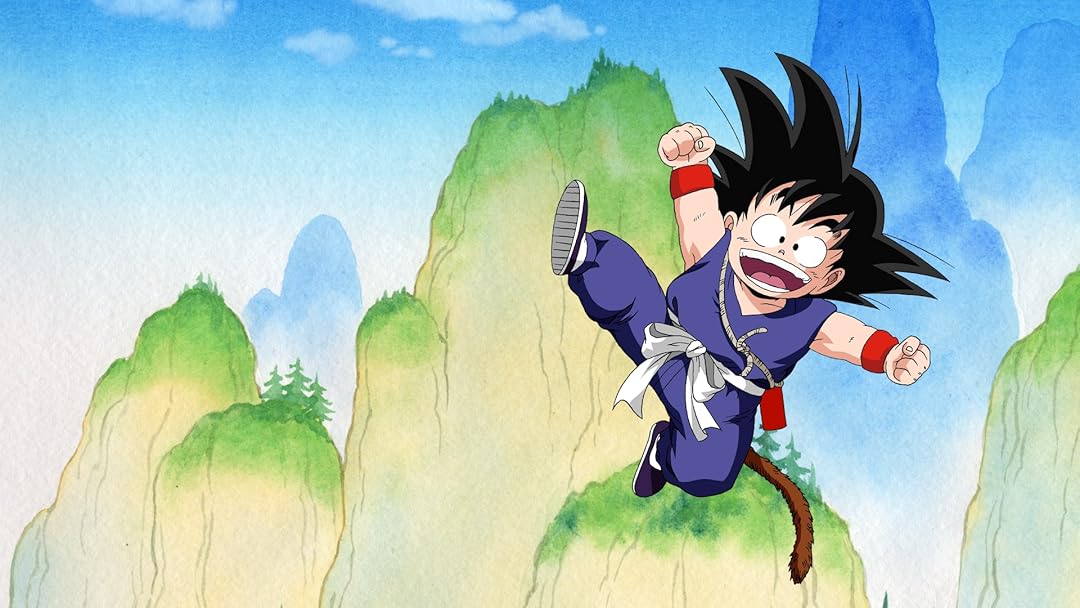
Dragon Ball is one of the most iconic and beloved anime franchises in history. Created by Akira Toriyama and spanning nearly four decades, the universe includes six main series, 23 films, multiple specials, and a non-canon alternate timeline. For a newcomer standing at the edge of all that content in 2026, the first question is always the same: where on earth do you start?
The answer is simpler than it looks. This guide cuts through every confusing timeline, every canon debate, and every film placement question to give you the clearest, most beginner-friendly Dragon Ball watch order available. Whether you want the fast route, the complete experience, or something in between, this guide has a clear path for you.
Understanding the Dragon Ball Universe Before You Start
Before diving into the watch order itself, it helps to understand the basic structure of the franchise. Dragon Ball is not a single continuous series like Naruto or One Piece. It is a collection of series that were produced over decades, sometimes by different creative teams, and not all of them occupy the same official timeline.
The main canon series — the ones that form the official, uninterrupted story from beginning to end — are:
- Dragon Ball (1986–1989)
- Dragon Ball Z or Dragon Ball Z Kai (1989–1996 / 2009–2011 remaster)
- Dragon Ball Super (2015–2018)
- Dragon Ball Daima (2024–2025)
Dragon Ball GT (1996–1997) exists in a separate, non-canon timeline and is not required viewing. It is enjoyable for completionists but has no impact on understanding the main story.
The franchise also includes 23 films of varying canonical status. Most are non-canon, but four are considered official canon and essential for new viewers: Battle of Gods, Resurrection F, Dragon Ball Super: Broly, and Dragon Ball Super: Super Hero.
With that foundation in place, here is the complete watch order.
Step One: Dragon Ball (1986) — 153 Episodes
This is where everything begins, and it is non-negotiable as a starting point. The original Dragon Ball follows young Goku — a strange, extraordinarily strong boy with a monkey tail — as he teams up with the resourceful teenage inventor Bulma to find the seven mystical Dragon Balls, magical orbs that summon a dragon capable of granting any wish when gathered together.
The original series establishes every foundational element of the franchise: Master Roshi and the Turtle School of martial arts, the World Martial Arts Tournament, Krillin as Goku’s best friend and rival, Piccolo as a terrifying enemy, and Bulma and Yamcha among the earliest members of Goku’s expanding circle.
Some new viewers are tempted to skip Dragon Ball and begin directly with Dragon Ball Z, which is more famous internationally. Do not do this. The original series is shorter, moves faster, and carries enormous emotional and narrative weight that Dragon Ball Z depends on. Understanding who these people are before Z begins makes every subsequent moment more impactful.
Where to stream: Crunchyroll, Funimation
Step Two: Dragon Ball Z Kai — 159 Episodes (Recommended) OR Dragon Ball Z — 291 Episodes
After completing the original Dragon Ball, you face the franchise’s most significant fork in the road.
Dragon Ball Z is the original continuation, running 291 episodes from 1989 to 1996. It covers the entire arc from the arrival of the Saiyans through the Cell Games and the Majin Buu saga. It is the version most fans who grew up in the 1990s and early 2000s watched and the one with the deepest nostalgic attachment. However, it is heavily padded with filler content — reaction shots that run for minutes, power-up sequences stretched across multiple episodes, and entire filler arcs inserted to give the manga time to get ahead of the anime.
Dragon Ball Z Kai is a remastered, filler-free version of Dragon Ball Z produced in 2009 and completed in 2011 (with the Buu Saga added later). It compresses the same story from 291 episodes down to 159 episodes of canonical content only, with restored animation, remixed audio, and a much tighter pace. For new viewers in 2026, Dragon Ball Z Kai is the universally recommended path.
The choice comes down to how you want to experience the material. DBZ Kai is the efficient, modern approach. Full DBZ is the nostalgic, uncut experience that includes memorable filler moments — including the Garlic Jr. Arc and Gohan’s high school adventures — that many fans are fond of despite their non-canonical status.
Recommendation for new viewers: Watch Dragon Ball Z Kai. You will cover the same essential story in nearly half the time without sacrificing any canonical content.
Where to stream: Both available on Crunchyroll and Funimation
Step Three: Battle of Gods and Resurrection F — Films (Canon)
After completing Dragon Ball Z or Kai, two films released in 2013 and 2015 bridge the gap directly into Dragon Ball Super.
Battle of Gods (2013) introduces Beerus, the God of Destruction, and his attendant Whis. Beerus arrives on Earth seeking a warrior called the Super Saiyan God and challenges Goku to a fight. The film introduces the divine power tier that defines Dragon Ball Super and is essential context for the series.
Resurrection F (2015) brings back Frieza — the franchise’s most iconic villain — in a new golden form following his resurrection by his surviving soldiers. It introduces the concept of Goku and Vegeta training under Whis to master new transformations.
Both films are canon and both are later adapted into the opening arcs of Dragon Ball Super. This creates an important practical note: if you watch the films first, skip Dragon Ball Super Episodes 1–27, which cover the same events. Begin Dragon Ball Super at Episode 28 to avoid watching the same stories twice.
Where to stream: Both on Crunchyroll
Step Four: Dragon Ball Super — 131 Episodes
Dragon Ball Super is the direct canonical continuation of Dragon Ball Z and the most modern chapter of the main story. Set a few years after the defeat of Majin Buu, it follows Goku and Vegeta as they discover that the universe contains multiple other universes, each with its own supreme God of Destruction, and that the Angels and the Omni-King exist above all of them.
Dragon Ball Super introduces many of the franchise’s most celebrated new concepts: Ultra Instinct, the Tournament of Power, the multiverse, Zamasu’s arc, and the fully developed God of Destruction mythology. For modern fans, Super is often the most beloved portion of the franchise, combining nostalgia for classic characters with ambitious new narrative scope.
The series has five major arcs:
- Battle of Gods Arc (Episodes 1–14) — Skip if you watched the film
- Resurrection F Arc (Episodes 15–27) — Skip if you watched the film
- Universe 6 Tournament Arc (Episodes 28–46) — Begin here if you watched both films
- Future Trunks Arc (Episodes 47–76) — One of the best arcs in the franchise
- Universe Survival Arc / Tournament of Power (Episodes 77–131) — The series’ spectacular finale
Where to stream: Crunchyroll, Funimation
Step Five: Dragon Ball Super: Broly (2018) — Film (Canon)
Immediately after Dragon Ball Super Episode 131, watch Dragon Ball Super: Broly.
The Broly film is a complete reimagining of the legendary Saiyan warrior Broly — a character who existed in the original non-canon film universe but had never been officially integrated into the main story. This 2018 theatrical film makes Broly fully canon, provides a rich origin story for both him and his companion Paragus, and retroactively enriches the Saiyan mythology established across the entire franchise.
The film was a massive commercial and critical success, and the combat sequences — animated by Toei Animation with unprecedented fluidity — are among the most visually extraordinary in all of Dragon Ball history. It is not optional.
Where to stream: Crunchyroll, Funimation
Step Six: Dragon Ball Super: Super Hero (2022) — Film (Canon)
After Broly, watch Dragon Ball Super: Super Hero. This 2022 theatrical film shifts the spotlight away from Goku and Vegeta and centers on Gohan and Piccolo, two characters who had been largely sidelined in Dragon Ball Super. The Red Ribbon Army returns in a new form, and the film features significant power developments for both Piccolo and Gohan that set up their relevance going forward.
Super Hero was produced using a distinct CGI animation style rather than traditional hand-drawn animation, which surprises some viewers. The style is polarizing but the storytelling is strong, and the emotional beats for Piccolo and Gohan are among the most satisfying in the franchise’s modern era.
Where to stream: Crunchyroll
Step Seven: Dragon Ball Daima (2024–2025)
The newest addition to the main Dragon Ball canon is Dragon Ball Daima, which premiered in October 2024 and concluded in early 2025. The series was Akira Toriyama’s final personal project before his death in March 2024, making it carry a particular emotional weight as a farewell from the franchise’s creator.
Daima follows Goku and his allies after they are transformed into children by a wish on the Dark Dragon Balls and travel to a demon realm called the Demon Realm in order to restore their original forms. The series is intentionally lighter in tone than Dragon Ball Super, echoing the adventurous spirit of the original Dragon Ball while introducing new mythology around the Demon Realm and the history of the Supreme Kai.
Watch Daima after Super Hero. It is essential for any fan of the franchise and serves as the most recent chapter of the official canon.
Where to stream: Crunchyroll
What About Dragon Ball GT?
Dragon Ball GT (1996–1997) is a non-canonical series produced after the original manga ended, without the involvement of Akira Toriyama in a meaningful creative capacity. It follows a story set years after Dragon Ball Z in which Goku is turned into a child again, and the trio of Goku, Pan, and Trunks travel through space searching for the Black Star Dragon Balls.
GT is not part of the official canon and contradicts aspects of Dragon Ball Super’s established mythology. Most fans and creators treat Super as the true continuation of the story.
That said, GT has a dedicated fanbase that remembers it fondly, and its final arc — the Shadow Dragon Saga — has genuine emotional moments, particularly its series finale. For completionists who want to experience everything, GT can be inserted after Dragon Ball Z and before Dragon Ball Super, understanding that it exists in its own separate timeline.
Recommendation: Skip GT on your first run. Return to it after completing the main canon if you want to explore the full breadth of the franchise.
Recommended Watch Paths at a Glance
| Path | Content | Total Episodes | Best For |
|---|---|---|---|
| Canon Essential | DB → DBZ Kai → DBS → Broly → Super Hero → Daima | ~450 episodes + 2 films | First-time viewers who want the clean story |
| Standard Fan | Canon Essential + Battle of Gods + Resurrection F + select films | ~460 episodes + 4 canon films | Most viewers, best balance |
| Full DBZ | DB → Full DBZ (291 ep.) → DBS → All films → GT | 700+ episodes | Nostalgic fans, completionists |
| Completionist | Everything above + GT + all 23 films + OVAs + specials | 900+ hours | Dedicated superfans only |
Where to Watch Dragon Ball in 2026
The complete Dragon Ball franchise is available on Crunchyroll globally, making it the single most reliable destination for both subbed and dubbed versions of every series. Most major series and the four canonical films are also available on Funimation, which shares a library with Crunchyroll following Sony’s acquisition. In the United States, several series are also available on Hulu.
Both dubbed and subtitled versions are widely praised for Dragon Ball, making it one of the more accessible franchises for viewers who prefer either format. The original Japanese cast — particularly Masako Nozawa as Goku — and the English FUNimation dub cast both have decades of history with these characters, and the choice between them comes down entirely to personal preference.
Final Advice for New Dragon Ball Fans
The most important thing to remember as you start Dragon Ball is that the franchise was designed to be experienced across years, not days. Each series has a different tone: the original Dragon Ball is a lighthearted adventure, Dragon Ball Z is intense action and escalating power, and Dragon Ball Super balances spectacle with multiverse mythology.
Do not skip the original series. Do not begin with Z. Do not worry about GT until you have finished the main canon. Follow the order above, start with Goku as a child discovering the world, and let the story grow with him. Dragon Ball is one of the foundational experiences of anime — a franchise that shaped the entire medium — and starting it correctly is the best gift you can give yourself as a new fan.