
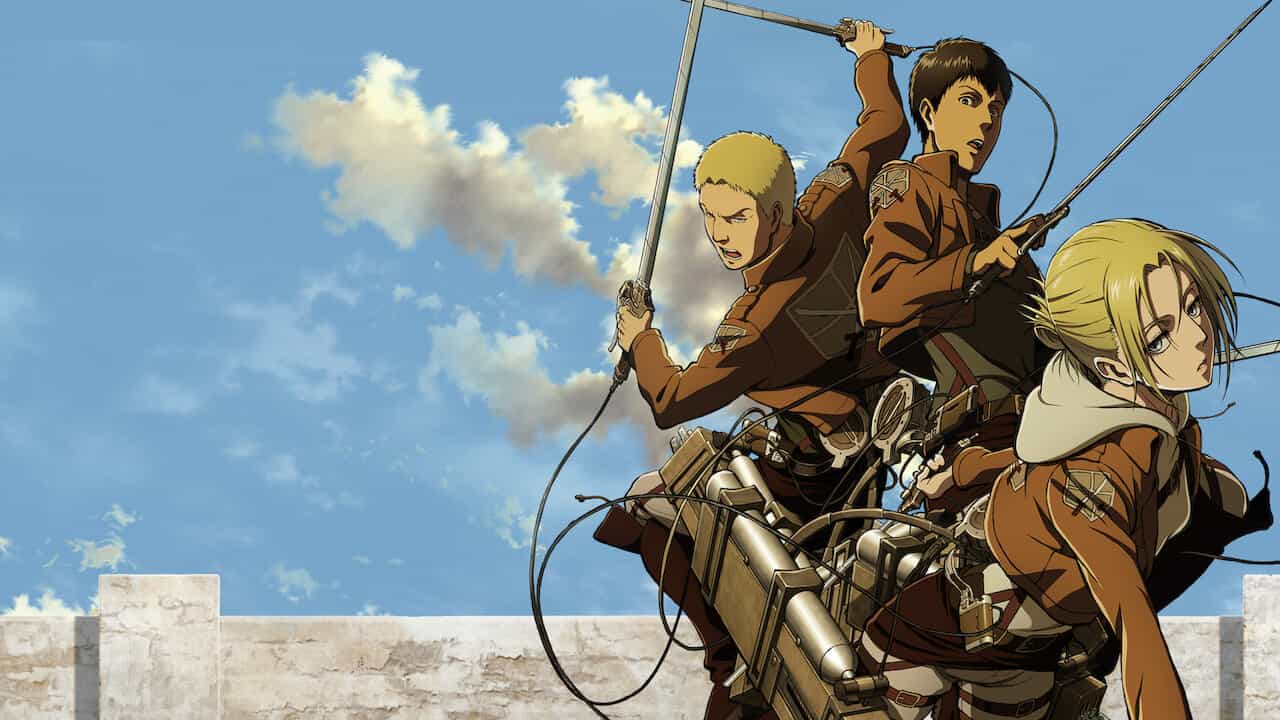
Attack on Titan is one of the most important anime series ever made. Since its debut in 2013, it has grown from a survival horror thriller into one of the most ambitious, morally complex, and emotionally devastating narratives in all of animated storytelling. For new viewers in 2026, the complete series — four seasons, multiple OVAs, compilation films, and a final special — is now fully available on streaming platforms and ready to be experienced from beginning to end.
The challenge for newcomers is knowing where to start, what order to follow, and which supplemental content is worth watching. This guide answers all of those questions clearly and completely, so you can dive in without confusion and without accidentally spoiling yourself.
Why Watch Order Matters in Attack on Titan
Attack on Titan is a series built entirely on the cumulative weight of its revelations. Information revealed in later seasons completely recontextualizes everything that happened earlier. Characters you understood one way in Season 1 become entirely different people — or are revealed to have been something different all along — by Season 4.
This is why chronological order is strongly discouraged for first-time viewers. Several pieces of supplemental content, including certain OVAs, take place before the main story’s opening events. Watching them first would rob you of some of the series’ most carefully constructed surprises and dramatically reduce the impact of its major twists. Release order — the sequence in which episodes and content were originally made available to audiences — is the universally recommended approach for newcomers and the order this guide follows.
Step One: Attack on Titan Season 1 (Episodes 1–25)
Begin where the story begins: with Season 1.
The first episode drops viewers directly into the world of Paradis, a civilization living inside massive concentric walls that protect humanity from Titans — enormous, humanoid creatures that devour people without any apparent biological reason. When the Colossal Titan breaches the outermost wall of Shiganshina District, the story of Eren Yeager, Mikasa Ackerman, and Armin Arlert begins.
Season 1 runs 25 episodes and functions as an almost perfect introduction to the series. It establishes the rules of the world, the horror of the Titans, the training and hierarchy of the military corps, and the emotional stakes that will define the entire series. The pacing builds from frantic action in the early episodes to a mid-season battle arc set in Trost District, and then expands into deeper mystery territory by the finale.
Do not read anything about Season 1 before you start. Even knowing whether a specific character survives changes the experience significantly.
Episodes: 25 | Where to stream: Crunchyroll, Funimation, Hulu
Step Two: Season 1 OVAs — After Finishing Season 1
Once you have finished Season 1, three OVAs can be inserted before moving to Season 2. These are optional for story comprehension but recommended for enriching your understanding of the characters and world.
- Ilse’s Notebook — A standalone story following Survey Corps member Ilse Langnar, whose journal is discovered by Levi and Hange. It introduces a significant piece of Titan mythology.
- The Sudden Visitor: The Torturous Curse of Youth — A lighter, comedic OVA centered on Jean and Sasha that provides character texture without advancing the plot.
- Distress — Another standalone story following Jean and Eren, again serving primarily as character development.
These three OVAs are not essential to follow the main story, but they are genuinely enjoyable and provide useful context. Watching them after Season 1 rather than inserting them mid-season avoids the disorienting effect of pausing the main narrative.
Step Three: Attack on Titan Season 2 (Episodes 26–37)
Season 2 is shorter than Season 1 at just 12 episodes, but it is arguably more densely packed with revelations. The events directly follow the Season 1 finale and immediately expand the world’s mysteries in directions that fundamentally change how you understand almost everything that came before.
This is where many viewers transition from enjoying the series to being completely obsessed with it. The combat sequences are exceptional, the character arcs take significant turns, and the final three episodes contain some of the most iconic moments in the entire franchise. Do not stop here — Season 2’s finale is designed to pull you directly into Season 3.
Episodes: 12 | Continuing episode count: 26–37
Step Four: No Regrets OVA — After Season 2
Attack on Titan: No Regrets (Parts 1 and 2) is the most important and highest-quality OVA in the entire franchise. It tells the origin story of Levi Ackerman, one of the series’ most beloved characters, following his life in the underground slums of the city and how he became humanity’s strongest soldier and a core member of the Survey Corps.
The OVA was originally adapted from a manga spinoff and is beautifully produced. By this point in your viewing journey, Levi is a character you care deeply about, which makes his backstory significantly more impactful than if you had watched it earlier. Watching No Regrets after Season 2 — before beginning Season 3 — is the optimal placement.
Episodes: 2 (each approximately 25 minutes)
Step Five: Attack on Titan Season 3 (Episodes 38–59)
Season 3 is split into two distinct halves, each of which could almost function as its own story while building toward the same destination.
Part 1 (Episodes 38–49) shifts dramatically away from Titan combat and into political thriller territory. The Survey Corps is forced to fight enemies within the walls — humans with deeply personal connections to the main cast — in a storyline that reframes the entire institutional structure of Paradis. The tonal shift surprises many viewers, but Part 1 contains some of the series’ sharpest writing and most emotionally complex character work.
Part 2 (Episodes 50–59) returns to large-scale Titan warfare and delivers the single most celebrated arc in the entire series: the Battle of Shiganshina. Everything the series has been building toward from its very first episode converges here. The animation quality, the musical scoring, the revelations, and the emotional devastation all combine to make the Shiganshina arc one of the greatest achievements in anime television. Clear your schedule before you begin Part 2.
After Episode 55 of Season 3, insert the Lost Girls OVA Part 3 (the Wall Sina, Goodbye story focusing on Annie Leonhart) before completing the remaining four episodes of Season 3.
Episodes: 22 total (12 in Part 1, 10 in Part 2)
Step Six: Attack on Titan Season 4 — The Final Season
Season 4, titled The Final Season, is split into three parts and is one of the most ambitious and structurally audacious final arcs in the history of anime.
Part 1 (Episodes 60–75) opens with a complete location and perspective shift that will disorient and surprise you — deliberately so. Stick with it. The decision to begin Season 4 the way it does is one of the most meaningful narrative choices in the series, and by its mid-point you will understand exactly why.
Part 2 (Episodes 76–87) accelerates the series toward its endgame with escalating stakes and introduces geopolitical complexity that reframes everything the characters — and the audience — thought they understood about the war. The final episodes of Part 2 include some of the most controversial and discussed moments in anime history.
Part 3 consists of two special-length episodes (each approximately 85 minutes) that conclude the series. The Final Chapters Part 1 and Part 2 bring every storyline, every character, and every moral question the series has raised to its conclusion. Watch them in a single sitting if at all possible. The experience of completing Attack on Titan is one you will want to be fully present for.
Episodes: 30 across Parts 1 and 2, plus 2 feature-length specials
Complete Watch Order at a Glance
| Order | Title | Episodes | Essential? |
|---|---|---|---|
| 1 | Season 1 | 25 | ✅ Essential |
| 2 | Ilse’s Notebook (OVA) | 1 | Recommended |
| 3 | The Sudden Visitor (OVA) | 1 | Optional |
| 4 | Distress (OVA) | 1 | Optional |
| 5 | Season 2 | 12 | ✅ Essential |
| 6 | No Regrets Parts 1–2 (OVA) | 2 | ✅ Highly Recommended |
| 7 | Season 3 Part 1 | 12 | ✅ Essential |
| 8 | Lost Girls: Wall Sina Parts 1–2 (OVA) | 2 | Recommended |
| 9 | Season 3 Part 2 (Ep 50–55) | 6 | ✅ Essential |
| 10 | Lost Girls: Wall Sina Part 3 (OVA) | 1 | Recommended |
| 11 | Season 3 Part 2 (Ep 56–59) | 4 | ✅ Essential |
| 12 | Season 4 Part 1 | 16 | ✅ Essential |
| 13 | Season 4 Part 2 | 12 | ✅ Essential |
| 14 | The Final Chapters Part 1 & 2 | 2 specials | ✅ Essential |
Total essential episodes: approximately 87 episodes + 2 feature specials
What About the Compilation Films?
Attack on Titan has several compilation films — theatrical edits of the first three seasons condensed into movie-length format. These are not recommended as your first watch. They cut substantial content, omit important character moments, and were produced primarily for theatrical audiences already familiar with the series. Watch the full seasons first. If you want to rewatch the story more quickly later, the films become a useful option.
Where to Watch Attack on Titan in 2026
The complete series is available on Crunchyroll and Funimation globally, with most seasons also available on Hulu in the United States. Crunchyroll remains the most consistently accessible option across regions and includes both dubbed and subtitled versions of every season and OVA. The dub quality is widely praised, making Attack on Titan one of the few anime where both sub and dub audiences report equally strong experiences.
Final Advice for New Viewers
Attack on Titan is designed to be watched with as little prior knowledge as possible. Avoid fan wikis, subreddit spoilers, and YouTube video essays until you have completed the entire series. The experience of watching the story unfold without knowing what is coming is genuinely irreplaceable.
The series will ask difficult questions — about war, freedom, inherited hatred, and what people are capable of in the name of survival — and it will not give you clean answers. That moral complexity is what elevates it beyond entertainment into something that viewers continue discussing and debating long after the final credits roll. Give it your full attention, follow the order above, and Attack on Titan will reward you with one of the most complete and affecting stories available anywhere in anime.